
The Long Middle
Every story skips it. Every life contains a great deal of it. Here is what to do while you are in there.
Stories are built from beginnings and endings because those are the parts that photograph well. The diagnosis and the recovery. The decision to leave and the arrival somewhere else. The first page and the last one.
What gets compressed into a sentence, or skipped with a line of white space, is the middle. And the middle is where almost all of the actual time goes.
This is a small distortion with large consequences, because people going through something long are unconsciously comparing their experience against a narrative shape that has had the boring years removed. They conclude they are doing it wrong. They are not doing it wrong. They are in the part nobody films.
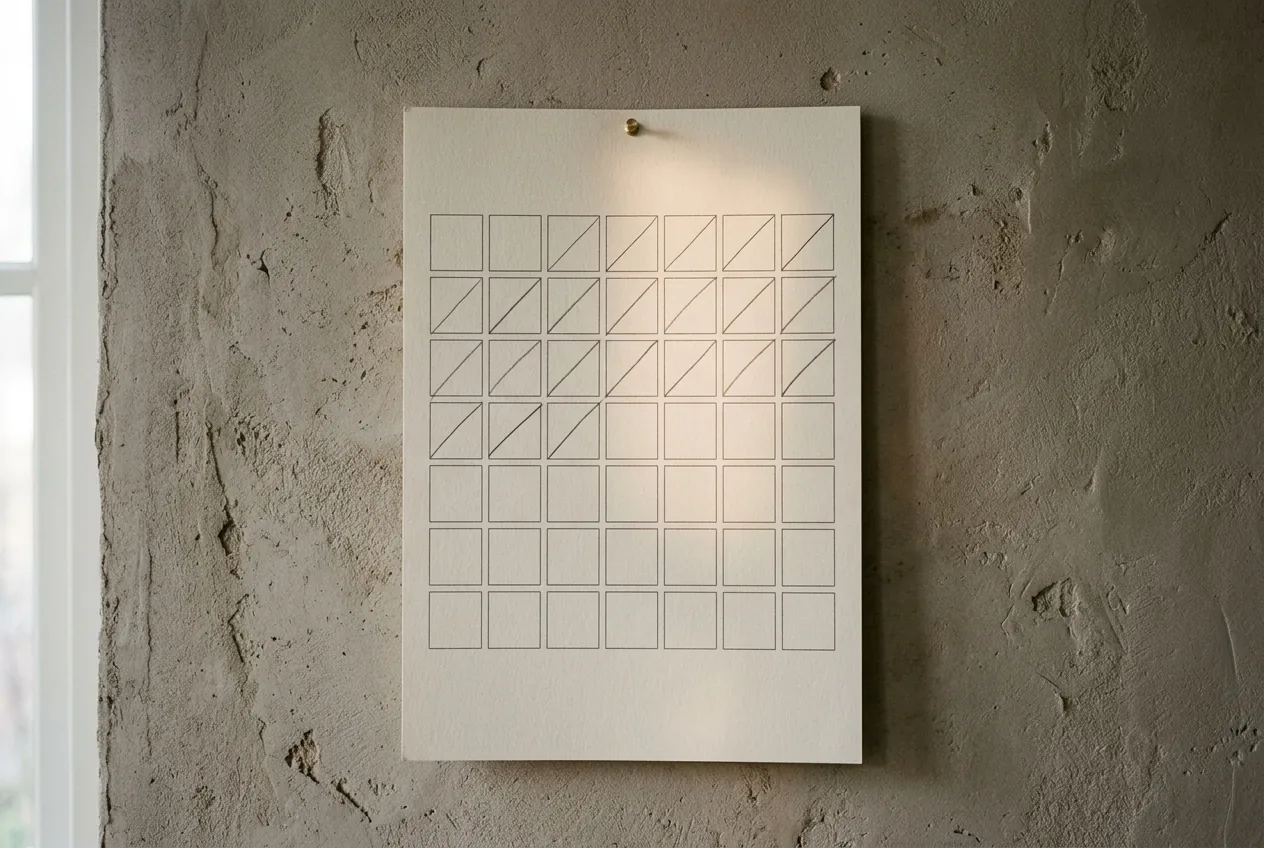
The particular difficulty of the middle
The beginning of a hard season has a strange energy to it. There is a crisis, and crisis is clarifying. People show up. You know what today requires because today is on fire.
The middle has none of that. The visitors have gone back to their own lives, quite reasonably. The situation has stopped being an emergency and become a condition. Nothing is resolving and nothing is collapsing, and there is no obvious date on which either will occur.
Nothing is resolving and nothing is collapsing. That is the middle, and it is the part that requires the most from you.
The specific difficulty is not intensity. It is that the middle asks for endurance without offering any of the things that usually make endurance possible: a visible finish line, an audience, a sense that today is different from yesterday.

What actually helps
Three things, none of them inspiring, all of them repeatedly reported by people who came through.
Shrink the unit. In the middle, planning at the scale of a year is not ambition, it is self harm, because a year is long enough for the absence of progress to become unbearable evidence. Most people who endure long stretches do it by quietly reducing the size of the thing they are managing until it fits. This day. This afternoon. The next hour, if that is what it takes. This is not defeatism. It is the correct scale for the terrain.
Keep one thing that is not the situation. Something with its own rhythm that has nothing to do with the illness, the case, the search, the wait. A weekly game. A garden. A page of writing that nobody will read. The value is not distraction. It is that a life which is entirely the situation has no surface left for anything to happen on, and people in that state stop being able to imagine an after.
Let it be witnessed. Not solved. Witnessed. This is where the small kindness does its real work. The middle is disproportionately lonely because the people around you have understandably filed the crisis as handled. Most of them are not absent, they are waiting for a signal, and the signal has to come from you. This is unfair and it is also how it works.
The part worth holding on to
Nobody tells you that the middle is where the change happens.
Beginnings and endings feel like the important parts because they are legible. But the person who comes out the other side of a long season is different, and the difference did not get made in the crisis or in the resolution. It got made across a thousand unremarkable days of continuing to do the next thing without proof that it was working.
That is not a consolation and it is not meant to make the middle pleasant. It is meant as an accurate description, offered to whoever is currently in one, of what all that apparently wasted time is actually doing.
You are not stuck. You are in the part that takes the longest.